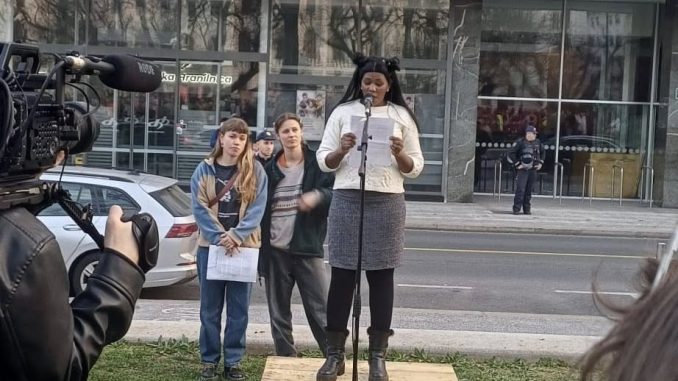
NE BOMO DELALE ZA VAŠE VOJNE:(eng below)Tovarišice in tovariši,danes je 8. marec, mednarodni dan delovnih žensk. Za nas je to priložnost, da lahko na glas povemo, kaj pomeni biti migrantska delavka v Sloveniji.
Veliko nas pride v Slovenijo z velikimi upi. Prihajamo, ker želimo dostojno življenje. Prihajamo, ker želimo delati, preživljati svoje družine, pomagati staršem doma, omogočiti boljšo prihodnost svojim otrokom. Veliko nas zapusti svoje države, svoje domove, svoje jezike in svoje skupnosti z mislijo, da bomo tukaj našle stabilnost. Ko pa pridemo sem, pogosto ugotovimo, da je realnost zelo drugačna.
Veliko nas živi v prenatrpanih hišah ali stanovanjih. Po pet ali šest ljudi v eni sobi. Ena kuhinja in ena kopalnica za vse. Včasih so to hiše, ki jih najamejo delodajalci ali posredniki in jih nato oddajajo nam po visokih cenah. Pogosto so ta stanovanja daleč od mesta ali od naših delovnih mest. Vsak dan preživimo ure na avtobusih, da pridemo do dela. Ta čas ni plačan, a je del našega vsakdana. Veliko migrantskih žensk dela opravlja delo čistilk v hotelih, restavracijah, pisarnah, domovih za starejše.
Včasih opravljamo tudi težka fizična dela. Imamo službe, ki jih velikokrat ostale delavke ne želijo opravljati. Delamo od zgodnjega jutra do večera. Pogosto moramo v enem dnevu zamenjati več lokacij. Ena ura tukaj, druga ura tam, tretja nekje drugje. Delamo hitro, pod pritiskom, pogosto brez dovolj odmora. Na koncu meseca pa je plača komaj dovolj za najemnino in hrano.
Veliko naših delovnih mest je negotovih. Pogodbe so kratke, čeprav je naša varnost pogosto odvisna od službe. Ko se pritožimo, ko rečemo, da pogoji niso pravični, nam delodajalci pogosto rečejo, naj bomo tiho. Grozijo nam z odpovedjo, z odvzemom dokumentov ali z deportacijo. To je način, kako nas držijo v tišini. Veliko migrantskih delavk zato prenaša stvari, ki jih ne bi smel prenašati nihče. Neplačane ure. Žalitve. Poniževanje. Včasih tudi spolno nadlegovanje na delovnem mestu. A večina nima informacij, znanja in moči, da bi se slabim delodajalcem uprla sama.
Nasilje nad migrantskimi ženskami pa se ne dogaja samo na delovnem mestu. Dogaja se tudi doma in v zasebnem življenju. Nekatere od nas so prišle v Evropo zaradi poroke ali združitve družine. Prišle smo z obljubami o ljubezni in boljšem življenju. Kasneje pa smo se znašle v odnosih, kjer se od nas pričakuje dvojno ali trojno delo. Delamo v službi, potem pa doma skrbimo za gospodinjstvo, za otroke, za družino. Včasih smo finančno ali pravno odvisne od partnerja. Če pride do nasilja, je zelo težko oditi. Pogosto tu nimamo mreže podpore, ne poznamo dobro sistema ali jezika. Nekatere ženske zato ostajajo v nasilnih odnosih, ker se bojijo, da bodo sicer izgubile dom, status ali celo otroke.
Hkrati pa v Sloveniji vedno pogosteje poslušamo ljudi, ki pravijo, da morajo zaščititi ženske pred migranti. Zaradi te retorike so v zadnjih tednih nekateri naši tovariši postali tarča napadov skupine zamaskiranih slovenskih moških. To se nam zdi cinično. Ti isti ljudje nikoli ne govorijo o realnem življenju delavskih žensk. Ne govorijo o ženskah, ki delajo dolge dneve za minimalne plače. Ne govorijo o ženskah, ki živijo v slabih stanovanjskih razmerah. Ne govorijo o ženskah, ki čistijo njihove hotele, pisarne in domove. Ne govorijo o ženskah, ki živijo v strahu pred nasilno deportacijo. Ko govorijo o pravicah žensk, govorijo o njih samo takrat, ko lahko to uporabijo proti migrantom.
Ampak migranti nismo sovražniki slovenskega ljudstva. Migrantske ženske in slovenske delavke imamo veliko skupnega. Na delovnih mestih imamo iste težave. Doma smo priča istim vzorcem. Živimo v istem ekonomskem sistemu, ki temelji na našem delu, čeprav zanj nismo pravično plačane.
Če hočemo družbo, kjer bodo ženske res varne, potem moramo zgraditi družbo, kjer bomo varni vsi. Družbo brez rasizma. Brez izkoriščanja. Družbo, kjer nihče ne živi v strahu pred deportacijo in kjer nihče ne mora molčati o nasilju, da bi preživel.
Za nas je 8. marec dan, ko se spominjamo zgodovine delavskega gibanja. Spominjamo se žensk, ki so se borile za pravico do dela, do plače, do izobraževanja, do političnega glasu. Spominjamo se, da te pravice niso bile podarjene, ampak izborjene. In spominjamo se, da ta boj še ni končan.Workers of the world, unite.Tukaj smo
**** english***
Comrades,today is March 8th, International Working Women’s Day. For us, this is an opportunity to say out loud what it means to be a woman migrant worker in Slovenia.
Many of us come to Slovenia with great hopes. We come because we want a dignified life. We come because we want to work, support our families, help our parents back home, and give our children a better future. Many of us leave our countries, our homes, our languages and our communities believing that here we will find stability. But when we arrive, we often discover that reality is very different.
Many of us live in overcrowded houses or apartments. Five or six people in one room. One kitchen and one bathroom for everyone. Sometimes these are houses rented by employers or intermediaries and then sublet to us at high prices. Often these apartments are far from the city or far from our workplaces. Every day we spend hours on buses just to get to work. That time is not paid, but it is part of our everyday life. Many migrant women work as cleaners in hotels, restaurants, offices, and nursing homes. Sometimes we also do heavy physical labor. These are often jobs that other workers do not want to do. We work from early morning until evening. Often we must move between several locations in one day. One hour here, another there, a third somewhere else. We work quickly, under pressure, often without enough rest. At the end of the month, the salary is barely enough for rent and food.
Many of our jobs are insecure. Contracts are short, even though our safety often depends on keeping that job. When we complain, when we say that the conditions are not fair, employers often tell us to stay quiet. They threaten us with dismissal, with taking our documents, or with deportation. This is how they keep us silent. Because of this, many migrant workers endure things that no one should have to endure. Unpaid hours. Insults. Humiliation. Sometimes sexual harassment at the workplace. But many women do not have the information, the knowledge, or the power to stand up to bad employers on their own.
Violence against migrant women does not happen only at work. It also happens at home and in private life. Some of us came to Europe through marriage or family reunification. We came with promises of love and a better life. But later we found ourselves in relationships where double or even triple work is expected from us. We work at our jobs, and then at home we take care of the household, the children, and the family. Sometimes we are financially or legally dependent on our partners. If violence happens, it is very difficult to leave. Often we have no support network here, and we do not fully know the system or the language. Because of this, some women remain in violent relationships out of fear that they will lose their home, their status, or even their children.
At the same time, in Slovenia we increasingly hear people saying that women must be protected from migrants. Because of this rhetoric, in recent weeks some of our comrades have been attacked by groups of masked Slovenian men. We find this deeply cynical.These same people never talk about the real lives of working women. They do not talk about women who work long days for minimum wages. They do not talk about women who live in poor housing conditions. They do not talk about the women who clean their hotels, their offices, and their homes. They do not talk about women who live in fear of deportation. When they speak about women’s rights, they do so only when they can use it against migrants.
But migrants are not the enemies of the Slovenian people. Migrant women and Slovenian working women have much in common. At work we face the same problems. At home we witness the same patterns. We live in the same economic system that depends on our labor, even though we are not fairly paid for it.
If we want a society where women are truly safe, then we must build a society where everyone is safe. A society without racism. Without exploitation. A society where no one lives in fear of deportation and where no one must remain silent about violence in order to survive.For us, March 8th is a day when we remember the history of the workers’ movement. We remember the women who fought for the right to work, the right to wages, the right to education, and the right to a political voice. We remember that these rights were not given—they were won. And we remember that this struggle is not over.
Workers of the world, unite. Tukaj smo!
Leave a Reply